Upgrading the CMS electromagnetic calorimeter for the High-Luminosity LHC
ECAL-BOOST integrates, tests and optimizes the new electronics for 75,848 lead tungstate crystals that measure electrons and photons at CERN.
Each square is one crystal. Blue clusters are electromagnetic showers. A lone amber hit is a spike, the kind of signal the trigger has to reject.
What we work on
Electronics upgrade
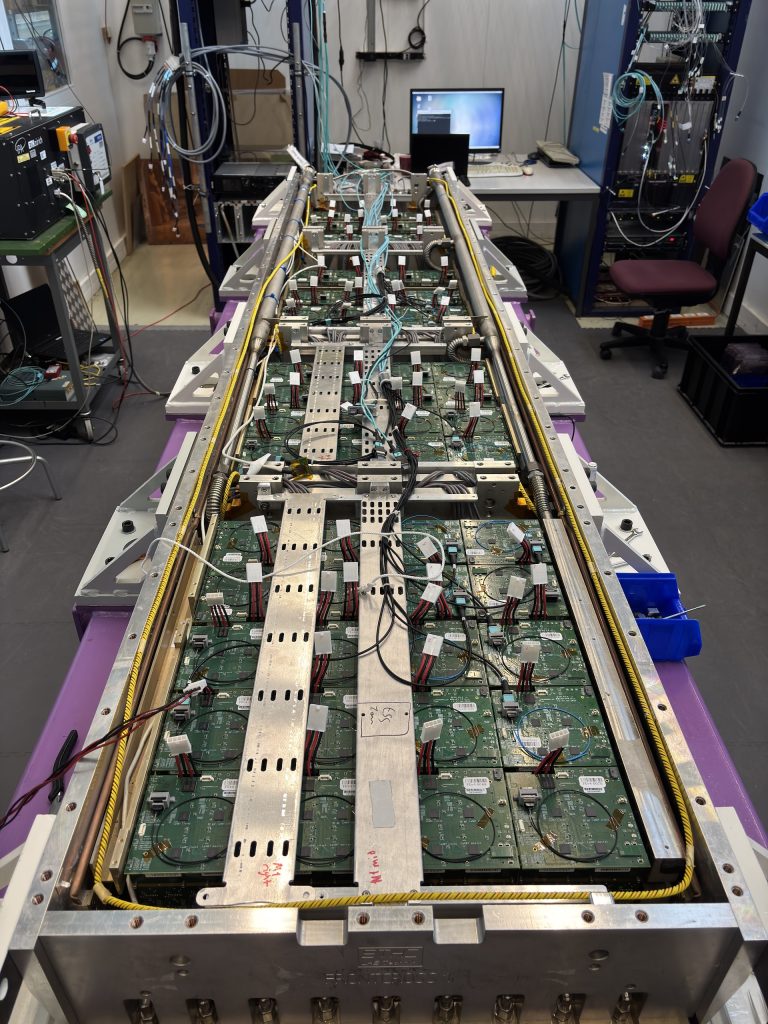
Replacing the front-end and off-detector electronics, starting with test Supermodule 36 and continuing through integration and commissioning.
DAQ and DQM software
Data acquisition and test software for trigger towers and modules, and data quality monitoring to validate every measurement.
Spike-killer optimization
Rejecting signals from direct ionization of the photodiodes by hadrons, so that the L1 trigger keeps only real energy deposits.
Why now
At the HL-LHC, the number of simultaneous proton–proton collisions per bunch crossing rises from about 60 to as many as 200, and radiation levels increase.
The upgraded ECAL electronics counteract detector aging, preserve the energy resolution and add precision timing, used for pileup mitigation and for locating the Higgs boson vertex in its two-photon decay.
Timeline
- 2026Work on test Supermodule 36. DAQ and DQM software development begins. Test beam campaign and analysis.
- 2027ECAL supermodules are removed from CMS. Replacement and testing of the electronics, with data quality validation.
- 2028Supermodules are reinserted into CMS.
- Final phaseSpike-killer optimization, electronics integration support and commissioning.
News
-
Field research at CERN: DQM interface, CMS Week and VFE card testing
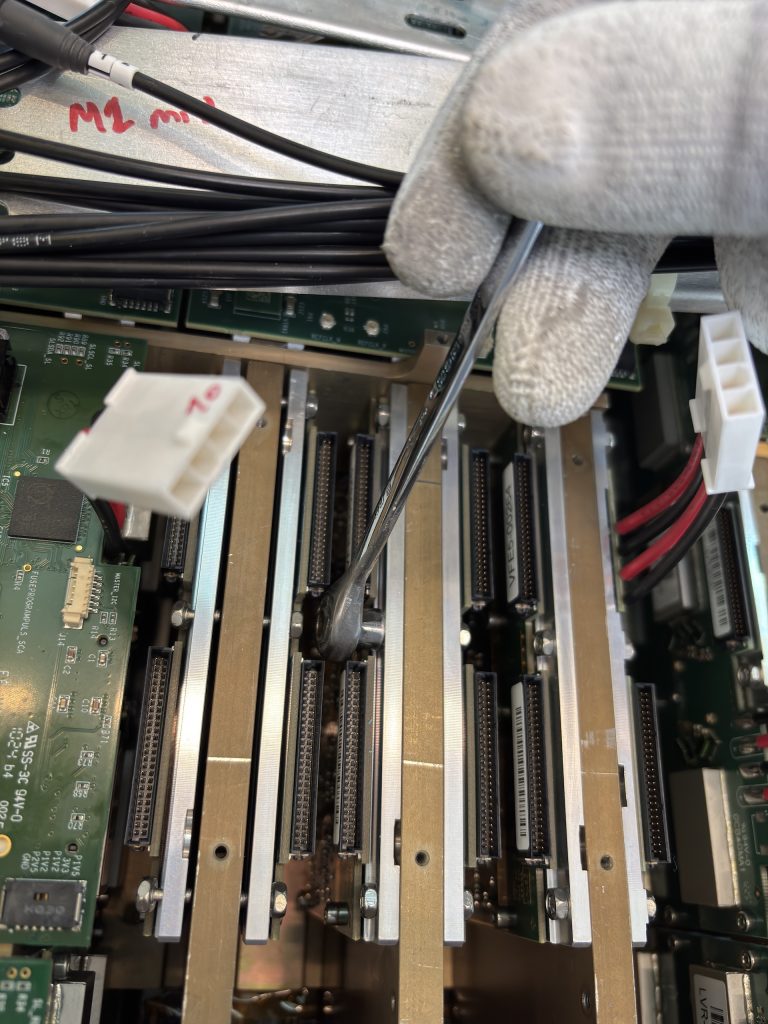
During a two-week stay at CERN in autumn 2026, a first DQM web interface was developed and more than 300 VFE cards…
-
ECAL Days in Split 2026
The CMS ECAL community met at the University of Split, Faculty of Science, from 9 to 11 September 2026 to discuss detector…
-
ECAL upgrade presented at ICNFP 2026 in Kolymbari
Marko Kovač presented the upgrade of the CMS Electromagnetic Calorimeter for the High-Luminosity LHC at the XV International Conference on New Frontiers…
-
Field research at CERN: ECAL test beam on the H4 beam line
During a two-week stay at CERN in May and June 2026, the project took part in the ECAL test beam on the…
-
Field research at CERN: more than 500 VFE cards tested
During a two-week stay at CERN in March 2026, more than 500 VFE cards were tested and new electronics were installed in…